


Disposable Underpad Sizes: 22×22, 28×34 or 30×36 Inches?
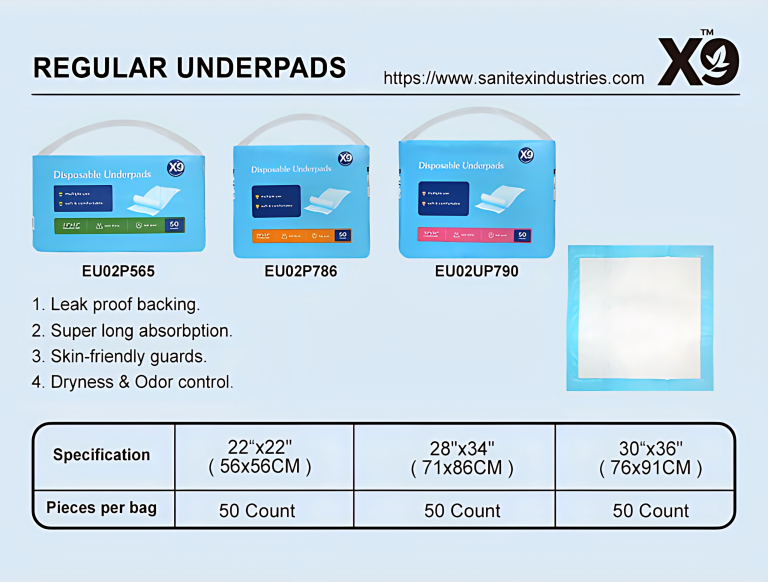
Choose a disposable underpad by measuring the area you want to protect. A chair seat and the middle of a mattress need different coverage. X9 disposable underpads come in three sizes: 22×22, 28×34 and 30×36 inches. All three listed options contain 50 pads per bag.
Start with the dimensions, then check the pad’s construction and how it stays in position during use. A larger pad covers more surface area. Its dimensions alone do not tell you how much liquid it can absorb or how long it can be left in place.
Compare the three X9 underpad sizes
| Listed size | Approximate metric size | Shape and coverage | Pack count |
|---|---|---|---|
| 22×22 inches | 55.9×55.9 cm | Square. Check against a chair seat or a smaller area of bedding. | 50 pads |
| 28×34 inches | 71.1×86.4 cm | Rectangle. Compare both orientations with the area around the hips on a bed. | 50 pads |
| 30×36 inches | 76.2×91.4 cm | The largest of these three options. Allows more coverage where space permits. | 50 pads |
The metric measurements above are conversions of the listed inch sizes, rounded to one decimal place. The outside dimensions may include a border around the absorbent area. Check the current product details when comparing usable coverage. You can find all three options on the X9 Disposable Underpads page.
Measure the surface before choosing a pack
For a chair, measure the flat seating area from side to side and front to back. Then consider where the user normally sits. A pad that bunches against an armrest or folds over the front edge may provide less useful coverage than its label suggests. Check the fit while the chair is being used, rather than judging it only on an empty seat.
For a bed, identify the area that needs protection. Many people position an underpad around the hips instead of trying to cover the entire mattress. Measure that area and compare the pad’s width and length with the available space. An underpad is a local layer of protection. A fitted mattress protector serves a different purpose.
For example, a measured 24×28 inch area is wider than a 22×22 inch pad. A 28×34 inch option provides more room in both directions. Before ordering, lay out those dimensions using a tape measure and check where the corners would fall. This is a coverage comparison, not an absorbency test.
Check orientation and movement
The two rectangular sizes can be compared with the long side running across the bed or along it. Choose the orientation that covers the area you measured. Keep the pad flat and follow the package directions for the absorbent face and backing. Smooth out folds before use.
After the person changes position, check that the pad still covers the intended area. More material can give extra room, but it can also fold where the seat or bedding is narrow. Do not assume that overlapping several small pads will behave like one larger pad. Edges can move and gaps can form between them.
Size and absorbency answer different questions
A 30×36 inch pad has a larger footprint than a 28×34 inch pad. That does not establish a percentage increase in fluid capacity. The absorbent core, materials, construction and test conditions also matter. X9’s product planning information lists polyethylene, nonwoven fabric, cellulose and superabsorbent polymer for this disposable underpad range. It does not provide a verified milliliter capacity for each size.
If you are comparing brands, use measurements for coverage and a stated, comparable absorbency specification for capacity. Labels such as “large,” “heavy” and “overnight” are not standardized dimensions. Match the actual measurements first. Avoid choosing a pad solely because another brand uses the same size name.
Bed pads and wearable pads have different roles
Disposable bed pads protect a surface. Bladder pads sit in underwear, while protective underwear or briefs are worn on the body. The National Institute of Diabetes and Digestive and Kidney Diseases lists large pads for protecting chairs and beds among products that can help manage bladder leakage. It discusses treatment separately.
If you need wearable protection as well as surface coverage, compare the relevant options in X9 Adult Care. Choose each item for its own fit and purpose. Buying a larger bed pad does not change the fit of a wearable product.
A short checklist before you order
- Write down the width and length of the area that needs protection.
- Choose the listed pad size and check both orientations for rectangles.
- Confirm the number of individual pads in the selected pack. These X9 options list 50 pads per bag.
- Read the product and package instructions for placement, changes and disposal.
- Check the fit during normal use before deciding whether the next pack needs more or less coverage.
Common questions
Which size is best for a chair?
Measure the seat first. The 22×22 inch square may suit some seating areas, while other chairs need a different footprint. Check that the pad lies flat and stays where protection is needed.
Can I choose a change interval from the size?
No. Width and length do not establish a safe change interval. Inspect the pad during use and replace it when wet or soiled, following the package directions and any individual care plan.
Are these underpads washable?
They are disposable underpads. Follow the package disposal instructions. Choose a product specifically labeled washable if you want a reusable option.
Compare X9 surface pads
Size, scent and construction vary by product; check each listing before choosing.