


How to Choose a Stainless Steel Cat Litter Box: Open Tray vs Enclosed
Short answer: choose stainless steel when you want a pan that wipes clean and does not soak up urine the way scratched plastic can. Then decide on the shape. An open tray with high sides suits cats who refuse a hood. An enclosed box with a stainless steel pan adds privacy and catches more kicked litter. Measure your cat and the floor space first; “Large” and “XL” only make sense next to the actual sizes.
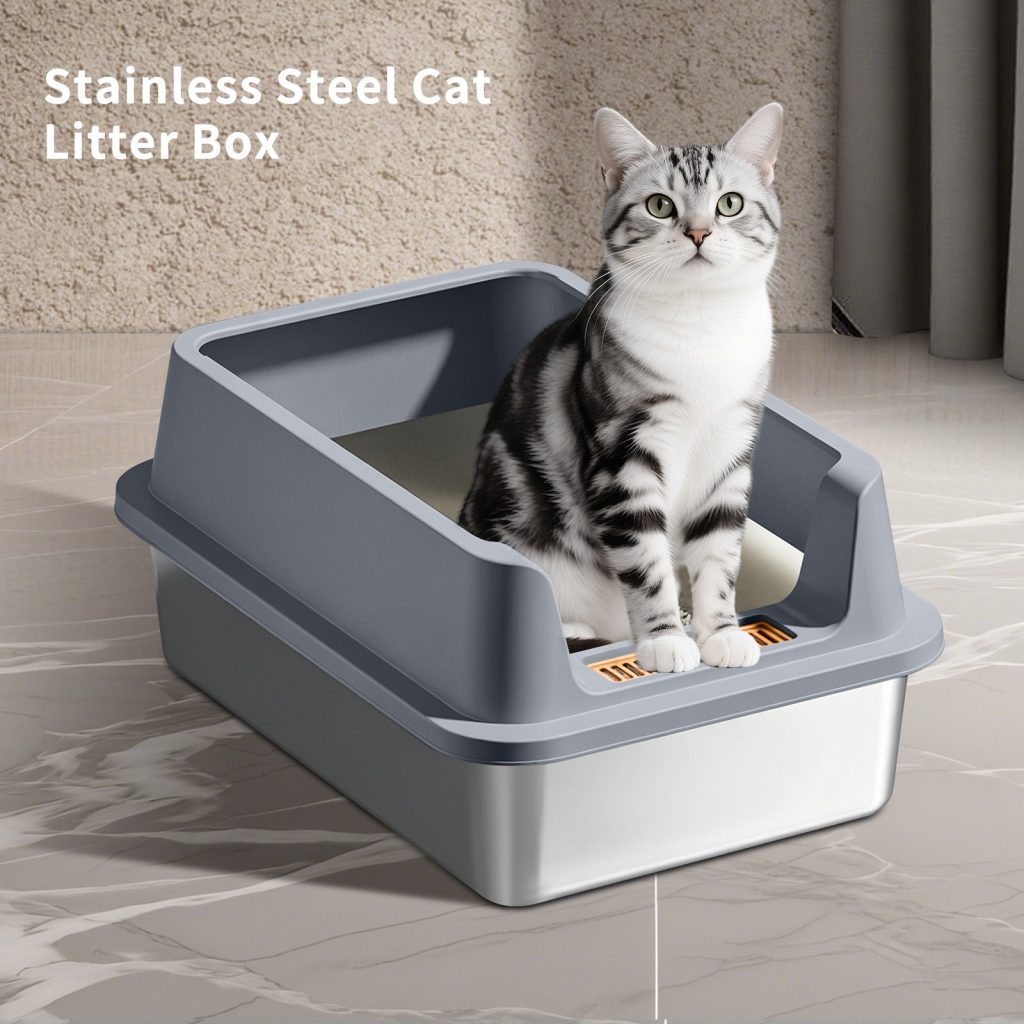
An open high-sided tray keeps the steel pan and a clear exit for cats who refuse a hood.
Why people switch to a stainless steel cat litter box
A plastic litter box starts out smooth. After months of scooping and clawing, the inside picks up scratches that hold residue and odor. Stainless steel is a hard, non-porous surface. Wash the pan with mild soap and warm water when you change the litter, and it will not absorb liquid the way worn plastic does.
That is the practical reason, not a promise that a steel box will never smell. Odor still depends on scooping, fresh litter and airflow.
One clarification: on most enclosed models, including X9’s, only the bottom pan is stainless steel. The hood is a separate cover. Do not expect the whole cabinet to be metal unless a page says so.
Four setups, and who they suit
1. Open high-sided tray
Some cats will not walk into a hooded box. They want a clear exit and no door brushing their back. An open stainless steel litter tray keeps the steel pan and adds a raised surround to help keep litter inside. It stays visible in the room, so it usually fits a utility or bathroom better than a living room. Sizes:
- L: 50 × 35 cm (about 19.7 × 13.8 in); XL: 60 × 40 cm (about 23.6 × 15.7 in)
- 10 cm tray: 19 cm overall height (about 3.9 in pan / 7.5 in overall)
- 15 cm tray: 24 cm overall height (about 5.9 in pan / 9.4 in overall) — better if your cat digs hard or kicks litter over a low rim
- Black or gray surround; non-slip feet, as shown on the product photos
2. Enclosed box with a steel pan
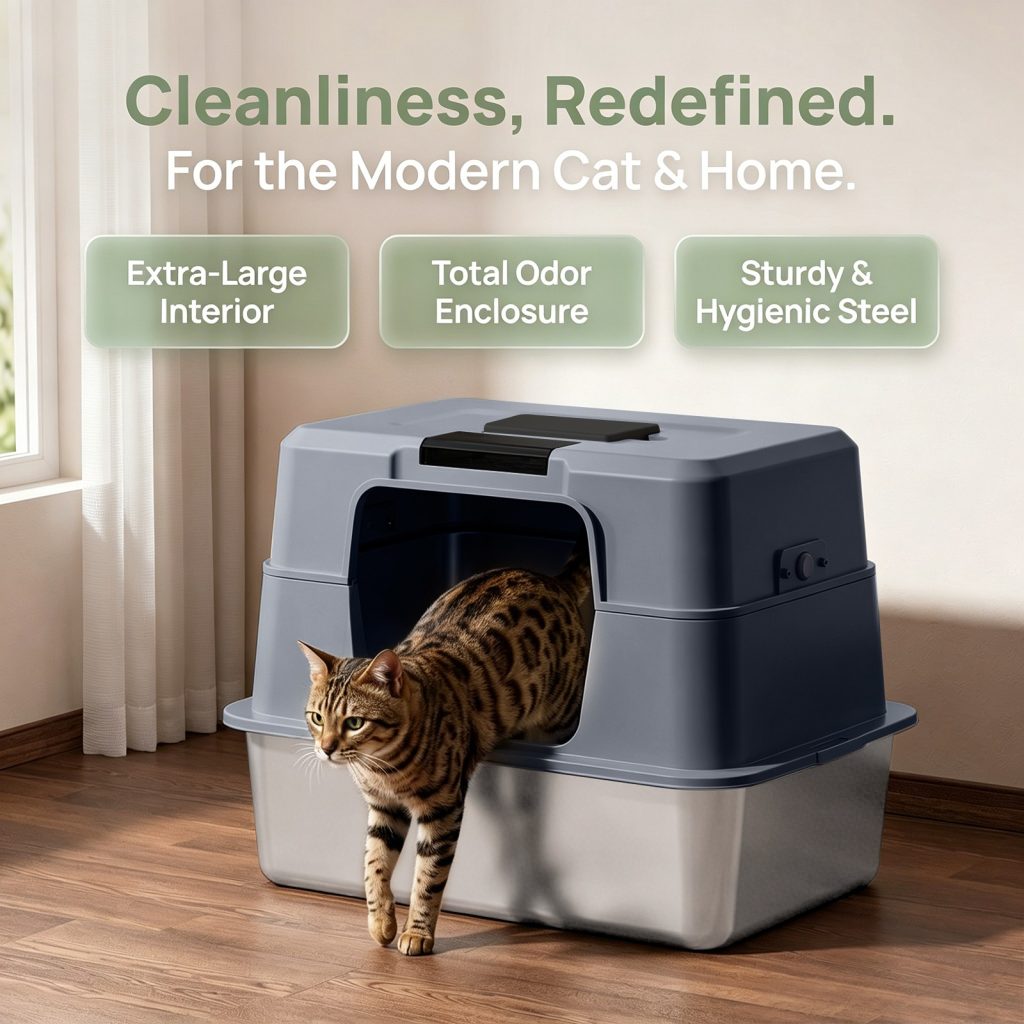
On X9 enclosed models, the hood is a cover — only the bottom pan is stainless steel.
A hood cuts down on scatter and gives your cat a more private spot. X9’s enclosed steel models use a stainless steel pan under a hood with a front flap. The Large is 50 × 35 × 35 cm overall (about 19.7 × 13.8 × 13.8 in) with a 50 × 35 × 10 cm pan. The XL is 60 × 40 × 40 cm (about 23.6 × 15.7 × 15.7 in) with a 15 cm deep pan — the largest covered steel option, a good starting point for big cats or deep diggers if the footprint fits. Both come in white, gray or black. Leave working room around the hood so you can scoop, and keep furniture off the XL’s top entry.
3. A covered box you can uncover
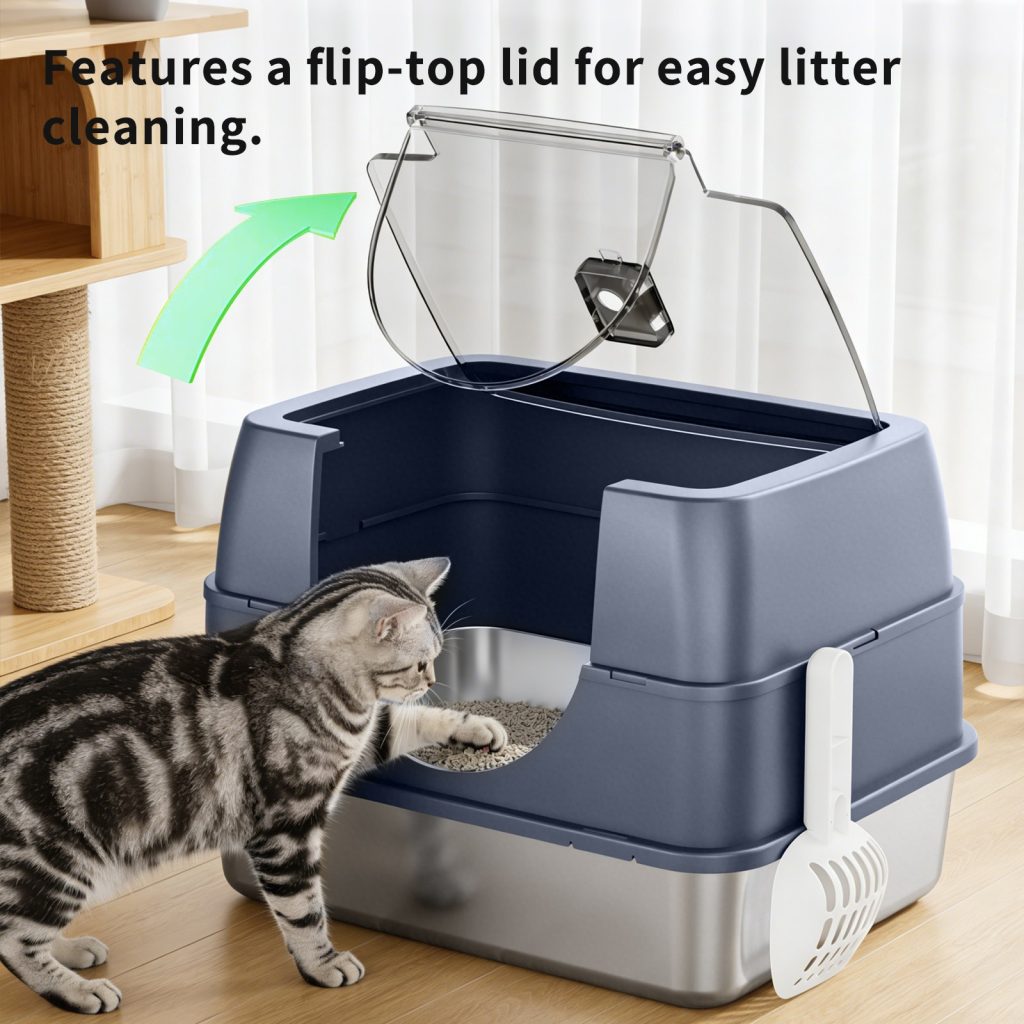
The Galaxy steel box has a flip-top lid for scooping and a detachable top if the cat needs time to accept a hood.
If you are not sure your cat will accept a hood, a hybrid helps. The Galaxy stainless steel litter box has a stainless steel pan (50 × 35 × 10 cm), a clear front door, a flip-top lid for scooping, and a detachable top. Overall size is 50 × 35 × 35 cm, in gray, beige or black. Start with the top off and add it once the cat is comfortable.
4. Automatic, when scooping is the bottleneck
Steel makes the pan easier to wash; it does not scoop for you. If the daily scoop is the real problem, consider a self-cleaning box. The X9 automatic litter box is an enclosed white unit, 50 × 50 × 53 cm (about 19.7 × 19.7 × 20.9 in), with a 78 L chamber, a waste drawer and Tuya app support. Check the litter types in the product photo and the manual, and keep the old box nearby at first.
How to pick a size that actually fits
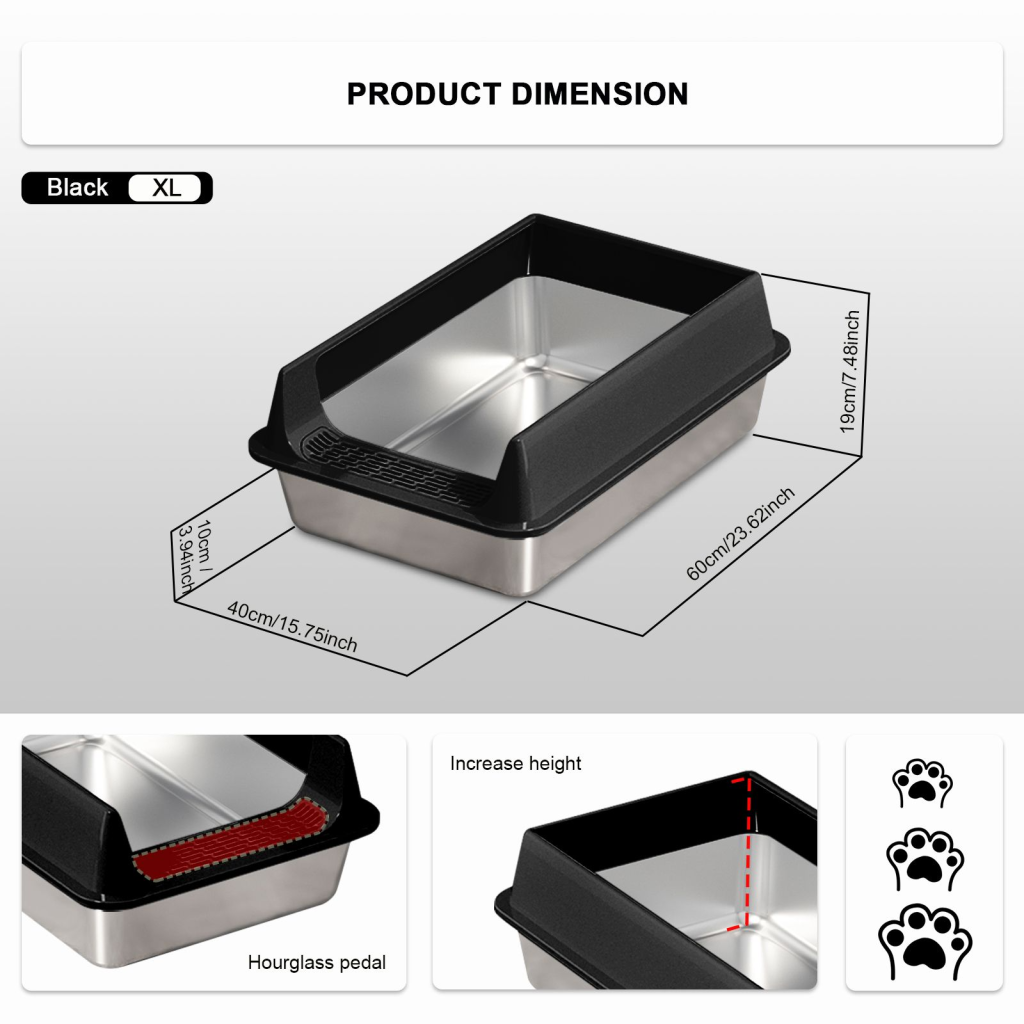
The XL open tray is 60 × 40 cm (about 23.6 × 15.7 in). This graphic shows the 10 cm pan (19 cm overall); the deeper option is 15 cm (24 cm overall).
Start with two measurements: your cat, and the corner where the box will live. A 50 × 35 cm pan (Large, and the open L tray) suits many average adult cats. A 60 × 40 cm pan (XL tray or XL enclosed box) gives more room to turn and dig. The compact Elf litter box (45 × 35 × 35 cm, about 17.7 × 13.8 × 13.8 in) fits a small apartment, but large cats may feel cramped.
Pan depth is 10 cm (about 3.9 in) on the Large enclosed pan and the shallower open tray, or 15 cm (about 5.9 in) on the deeper options. Deeper helps cats who bury waste thoroughly; just do not overfill it. Covered Large models are 35 cm tall (about 13.8 in); the enclosed XL is 40 cm (about 15.7 in). Make sure the cat can step in, and that nothing blocks a top entry.
A useful check, not a guarantee: many owners aim for a box at least one and a half times the cat’s length. “XL” is not a breed promise — compare your cat with the outside measurements. Multi-cat homes usually need more than one box.
Steel pan or all-plastic hooded box?
Steel is the better everyday material for the part that holds litter. Plastic is lighter, often comes in more colors, and costs less if you want a second box in another room. X9’s Galaxy plastic hooded box uses the same 50 × 35 × 35 cm overall size as the Galaxy steel version, with a plastic tray, in gray, orange or pink. If you already know you want a steel pan, choose the steel Galaxy or one of the enclosed steel boxes instead.
When the feature you care about is a door or a drawer, not the pan material, see the rest of the Cleaning & Hygiene range — including the Cruiser, cube and drawer boxes. If odor after months of use is the issue, start with a steel pan. If scatter or privacy is the issue, a covered plastic box can be enough, or pair a steel pan with a hood.
X9 stainless and covered options at a glance
| Model | Pan / tray | Overall size | Best starting point if… |
|---|---|---|---|
| Open steel tray | Stainless steel; L 50×35 or XL 60×40 cm; 10 or 15 cm deep | 19 or 24 cm tall | Your cat refuses a hood |
| Enclosed steel, Large | Stainless steel, 50×35×10 cm | 50×35×35 cm | You want privacy and a steel pan in a standard footprint |
| Enclosed steel, XL | Stainless steel, 60×40×15 cm | 60×40×40 cm | You have a large cat or a deep digger, and the floor space |
| Galaxy steel | Stainless steel, 50×35×10 cm | 50×35×35 cm | You want a flip-top lid and the option to run it uncovered |
| Automatic, 78 L | See listing and manual for litter type | 50×50×53 cm | Reducing daily scooping matters more than a steel pan |
Setup and care that actually help
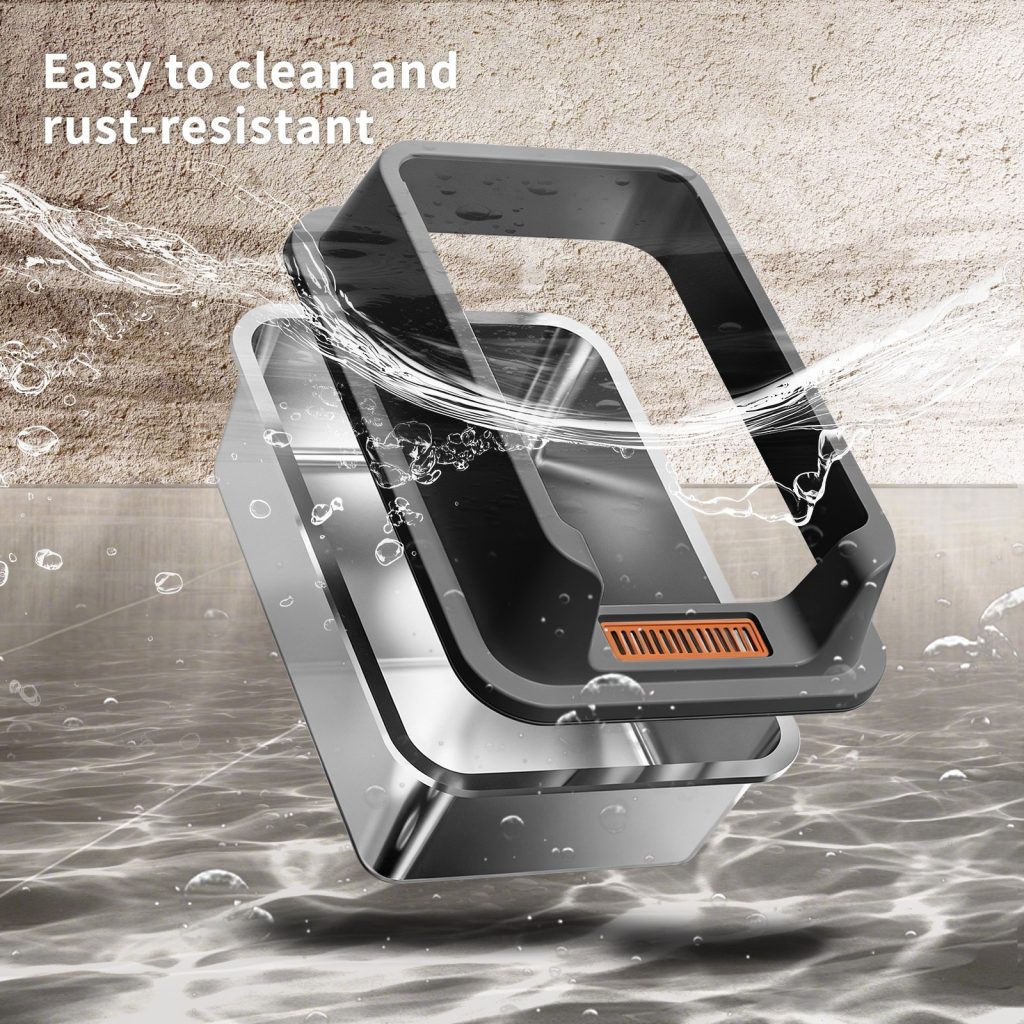
When you change the litter, wash the steel pan with mild soap and warm water, rinse, and dry it. Avoid abrasive pads.
- Placement. Put the box in a quiet, easy-to-reach spot, away from food and water bowls. Covered boxes need clearance in front of the door (and above a top entry).
- Litter. Use a litter your cat already accepts, filled deep enough to dig without overflowing the rim. For the automatic box, follow the litter types in the product photo and the manual.
- Cleaning the steel pan. Scoop daily. When you change the litter, wash the pan with mild soap and warm water, rinse, and dry it. Avoid abrasive pads that can scratch the finish.
- Introducing a hood. If your cat is used to an open box, leave the new hood off for a few days, or prop the flap open, then add it once they are using the pan reliably.
For wipes, gloves and other supplies, see litter boxes, grooming and cleaning. Scratching posts are covered in the cat scratcher size guide. X9 orders ship free within the United States, with 30-day returns (return policy). X9 Pet & Home is operated by IVY Space LLC in Harpers Ferry, West Virginia (About).
Stainless steel cat litter box FAQ
Is a stainless steel litter box better than plastic?
It is better at the job most people buy it for: a pan that wipes clean and does not absorb urine the way a scratched plastic tray can. Plastic can still be right for a lighter, colorful or second box. Many enclosed “steel” boxes, including X9’s, use a steel pan with a non-steel hood.
Will my cat use a covered steel box?
Many will, but some will not. If your cat has always used an open tray, start with the open steel tray or the Galaxy steel box, whose top can come off. If a cat suddenly stops using the box, check cleanliness and location first, and talk to your vet if it is sudden.
What is the difference between Large and XL on the enclosed steel boxes?
Large is 50 × 35 × 35 cm overall with a 10 cm deep pan. XL is 60 × 40 × 40 cm overall with a 15 cm deep pan. XL is not a guarantee for a particular breed. Compare your cat and your floor space with those numbers.
How do I clean a stainless steel litter tray, and do I still need to scoop?
Yes, unless you buy a self-cleaning model and set it up as the manual describes. Scoop solids daily. When you empty the litter, wash the steel pan with mild soap and warm water, rinse well and dry it.
Does X9 offer free shipping and returns on litter boxes?
Yes. Orders shipped within the United States ship free, and you can request a return within 30 days. Check the return policy for eligibility and any sale exclusions before you send a box back.